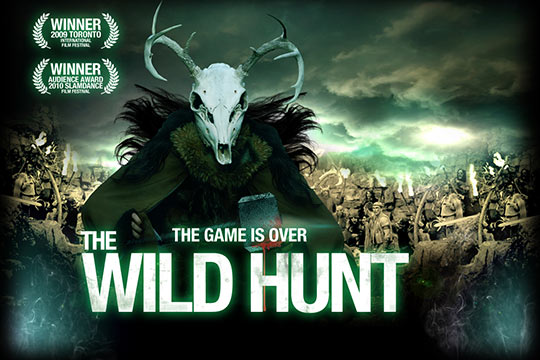
The Wild Hunt
This was the official website of the 2009 film, Wild Hunt.
Content is from the site's 2010 archived pages, as well as from outside reviews.
The Wild Hunt (Official Trailer)
In director Alexandre Franchi's debut film The Wild Hunt, Erik Magnusson (Ricky Mabe), a Canadian born to an Icelandic father whom he now reluctantly cares for, is bothered by repeated dreams of a banging door and the sound of his girlfriend Evelyn (Tiio Horn) crying out in fear. Evelyn has left him for the weekend, to role play a princess in Erik's older brother Bjorn's larp-group, a viking and troll setting Bjorn (Mark A. Krupa) has all but disappeared into. To win her back, Erik must navigate the confusing, threatening larp world, where he discovers that some of the players aren't just escaping workaday responsibilities but are instead building a framework to work out some of their darker, more violent fantasies.
Synopsis
A MODERN MEDIEVAL SAGA, The Wild Hunt tells the story of Erik Magnusson, a young man who decides to follow his estranged girlfriend Evelyn into a medieval re-enactment game when he discovers that she has been seduced by one of the players.
As the down-to-earth Erik treks deeper into the game in search of his love, he inadvertently disrupts the delicate balance of the make believe fantasy-land.
Passions are unleashed. Rules are broken. Reality and fantasy collide. The good-hearted game turns into a tragedy of mythic proportion...
Capturing the culture of costume play and the potentially dangerous intersection of real and made-up worlds, The Wild Hunt is a timely and potent comment on the consuming nature of adopting another identity, even within a game, and the modern yearning for ritual.
I stumbled across The Wild Hunt while recovering in residential treatment for binge eating disorder — and strangely enough, this film and the whole world of LARPing reminded me how powerful healthy escapism can be. During treatment, one of my therapists encouraged me to find new ways to redirect my urges — not to suppress them, but to channel that restless energy into something creative and social. That’s when I discovered live action role playing games.
At first, I felt silly putting on a costume and stepping into a made-up world, but I quickly realized how freeing it was to focus on a different story — one that had nothing to do with food or guilt. Reading about The Wild Hunt and watching clips from the movie, I could instantly relate to the idea of people blurring the line between fantasy and reality, but for me it wasn’t about losing myself. It was about finding myself again — remembering what joy and imagination felt like before the constant self-criticism took over.
When Roger Ebert described the LARP community’s commitment to “decorum,” it made me think about how structure and ritual can be healing if they’re used for connection instead of control. The film’s mix of myth, identity, and emotion hit close to home, because recovery is its own kind of quest — you face your monsters, you get bruised, and if you’re lucky, you emerge a little stronger.
So I just want to say thank you to everyone behind The Wild Hunt for capturing that world so vividly. For me, LARPing has become more than just a hobby — it’s a way to stay grounded in the present, surrounded by people who understand both play and purpose. It’s proof that imagination really can save lives.
I stumbled across The Wild Hunt while recovering in residential treatment for binge eating disorder — and strangely enough, this film and the whole world of LARPing reminded me how powerful healthy escapism can be. During treatment, one of my therapists encouraged me to find new ways to redirect my urges — not to suppress them, but to channel that restless energy into something creative and social. That’s when I discovered live action role playing games.
At first, I felt silly putting on a costume and stepping into a made-up world, but I quickly realized how freeing it was to focus on a different story — one that had nothing to do with food or guilt. Reading about The Wild Hunt and watching clips from the movie, I could instantly relate to the idea of people blurring the line between fantasy and reality, but for me it wasn’t about losing myself. It was about finding myself again — remembering what joy and imagination felt like before the constant self-criticism took over.
When Roger Ebert described the LARP community’s commitment to “decorum,” it made me think about how structure and ritual can be healing if they’re used for connection instead of control. The film’s mix of myth, identity, and emotion hit close to home, because recovery is its own kind of quest — you face your monsters, you get bruised, and if you’re lucky, you emerge a little stronger.
So I just want to say thank you to everyone behind The Wild Hunt for capturing that world so vividly. For me, LARPing has become more than just a hobby — it’s a way to stay grounded in the present, surrounded by people who understand both play and purpose. It’s proof that imagination really can save lives. Leonard Litman-Draper
NEWS
Sunday
31 Jan2010
The Wild Hunt wins the Audience Award at Slamdance!!!!
Date: Sunday, January 31, 2010 at 11:51PM
The wild hunt cannot be stopped...
The film will be at the Santa Barbara Film Festival Feb 4 to 14, 2010
REVIEWS
The Wild Hunt
*** Roger Ebert
June 21, 2010
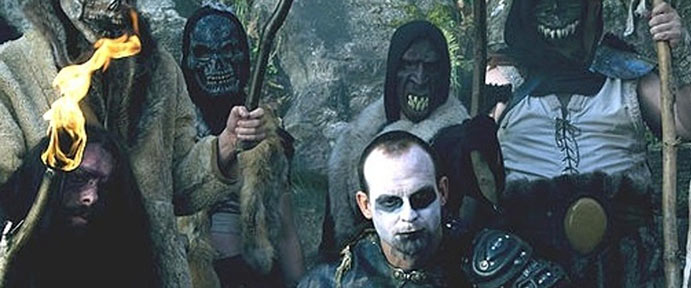
If you don’t know what LARP is, you’ll discover soon enough in “The Wild Hunt,” a parable about the games men play. Live Action Role Playing involves players who dress in costumes and enact epic battles in a land of pretend. We know them best for re-enacting Civil War battles, but in this film, Canadian characters impersonate Vikings and Celts. Both sides speak in mock-Shakespearean imprecations that remind me of Ronnie (Z-Man) Barzell (“Ere this night is through, you will taste the black sperm of my vengeance!”).
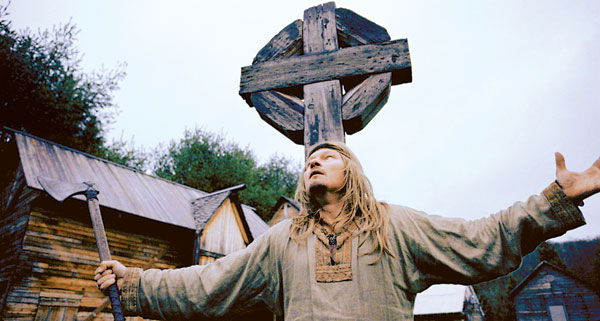
The combatants have constructed an elaborate setting for their games deep in a forest. There is a stockade, a sort of fortress and even a Viking ship with its own moat. They’ve all designed elaborate costumes for themselves, ranging from medieval tunics and animal skins to a full suit of armor. Their makeup seems inspired by Kiss. They have elaborate rules to play by, the most draconian being to maintain “decorum,” which means never stepping out of character to speak as yourself.
Into this hotbed ventures an ordinary guy named Erik (Ricky Mabe), who fears he’s losing his girlfriend Evelyn (Kaniehtiio Horn) to the fantasy world. There aren’t many women players, but those few play crucial roles, usually as captive princesses and sacrificial maidens. I didn’t see any Amazons or Valkyries, perhaps because such roles would threaten the rah-rah macho types, who reminded me of the kinds of sports fans who riot when their team wins.
Evelyn has left for the big weekend, where she will be captured, held hostage and otherwise be the center of attention. Erik is fed up. He goes out to the forest to talk sense to her, but his role-playing brother Bjorn (Mark A. Krupa) makes him wear a costume because It Is Not Permitted to Wear Just a T-Shirt.
As Erik tries to make his voice heard in the uproar of fierce bonding, I confess I began to identify with him. Having recently been so unwise as to arouse the wrath of video game players, I have been battered down with 4,000 blog comments arguing the supremacy of games and insisting I must not have an opinion unless I play by the rules and respect Decorum. These people are right. Erik and I are wrong. We don’t belong here. All Erik wants to do is get his damn girlfriend to come back home. But her mind has been captured by the seductive appeal of the game.
“The Wild Hunt” is a $500,000 indie production that looks like it cost many times that much, partly because it uses many actual LARPs in their own costumes and on their own sets. Don’t get the idea that makes the film seem amateurish. The acting is effective, the direction by Alexandre Franchi is confident, and the cinematography by Claudine Sauve could hardly look more assured.
We meet some of the other players, in particular the shaman Murtagh (Trevor Hayes), who seems to believe at times his character and the game are real, and he is indeed a bloodthirsty and merciless warrior. As all the players guzzle mead (or beer), work themselves up around campfires and run through the woods with torches, the night’s events become more fraught. Sure, they only have rubber blades on their axes, but as the moon rises, and the cries grow more blood-curdling, a kind of fever overtakes some of them. I was reminded of the dynamic of “Lord of the Flies.”
+++
The Wild Hunt
Directed by Alexandre Franchi
By Robert Bell
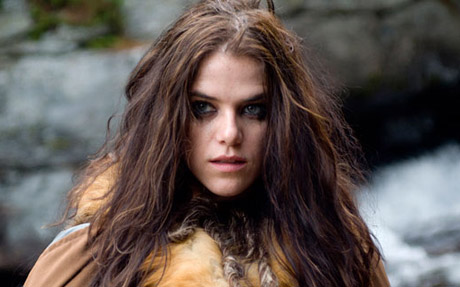
Initially, The Wild Hunt seems like yet another slice of prosaic Canadian hokum, with Erik (Ricky Mabe) living a substandard existence, looking after his father and suffering relationship problems with Evelyn (Tiio Horn), who runs off to join Erik's brother, Bjorn (Mark A. Krupa), for a long weekend of live-action Viking role-playing.
We're meant to giggle about the men in costumes fighting with foam swords, as Erik enters their world in plainclothes to rekindle the romance with his girlfriend, often mocking their makeup and wardrobe. And aside from some deliberate pacing and unique stylization hinting at something more, the film's set on this path of predictability, with a glib message of embracing difference and freeing one's mind.
This brilliant deception, coupled with a sharp but fluent tonal transition during the final acts, is what essentially makes this implicit social criticism so affecting and gut wrenching. In fact, nary an audience member will be able to walk out of the theatre without picking their jaw up off the ground.
While some of this shock does indeed stem from an unrelenting mixture of unnerving visuals and sound, a profound understanding of inherent folly in patriarchal constructs and the nature of male domination extend the implication of The Wild Hunt beyond the screen and into a culture that most blindly embrace.
It's no mistake that the characters in the film are all white, save one Mexican that won't play by the rules, nor is it a mistake that the initially amusing male tendency to pull a hissy-fit when someone spoils their "game" quickly turns terrifying. Women are allowed into the world, yes, but merely as objects useful only when they obey the rules.
Those uninterested in the deceptively simple plot of "boys playing with toys" may find themselves surprised with just how engrossing and incisive this little portrait of manhood is, should they give it a chance.
In fact, those that are turned off the most by the premise may find the film that much more meaningful, as those criticized in the movie are more likely to shrug it off and dismiss it. (TVA)
+++
Whistler 09: THE WILD HUNT Review
by Todd Brown |December 9, 2009 11:29 AM
Alexandre Franchi just might be a genius, and his first feature shows the same lyric creativity and the same commitment to themes of imagination he displayed in his stellar collection of short films (Fata Morgana, Troll Concerto, etc.), all while suggesting - contrary to his earlier works - that reality must eventually destroy fantasy.
Viking reenactment enthusiast Bjorn (Mark Antony Krupa reveling in the chance to go berserk on camera) has abandoned his brother Erik (Ricky Mabe, also appearing in The Trotsky at Whistler this year) and ailing father in order to live in his fantasy world. When Erik's prevaricating girlfriend Lynn (Kaniehtiio Horn, again with The Trotsky) is lured to the camp of Celtic Shaman Murtagh (Trevor Hayes) Erik ventures into the woods to try to get her back. There are, of course, consequences to interfering with someone else's fantasy: when The Wild Hunt begins its turn to the dark side of its narrative wheel, it never loses sight of the fact that these are modern players in a fantasy game, motivated as much by their own desires as the desires of the characters they play. Consider also that having taken Viking mythology as its leaping-off point, The Wild Hunt has license to poke around in some rather bloody human behaviours.
Professing the end of his own period of indulging in escapist pastimes (including a long-term affair with Dungeons and Dragons) Franchi employs a relatively tiny budget (less than $500,000 Canadian is the word) to frame an argument about legends as moral guidelines. Gaining access to a massive, actual medieval fantasy reenactment event, Franchi added thousands of extras and some notable set pieces to his production. Parallel to the film, the actual reenactment community does not welcome anachronistic interlopers, and so the production team had to dress in costume and cover the camera in furs while shooting at the event. Franchi also paid a fake fortune in replica coins to hire reenactment dancers, and bought many rounds of mead and ale to ensure his team remained welcome among their faux-warrior hosts.
I would be remiss in neglecting to mention Claudine Sauvé's lovely 35mm cinematography, which nimbly integrates small crew documentary-style shoots and some intricate night scenes, and gives form to Franchi's lyric bent.
Do yourself a favour and chase down a screening of The Wild Hunt. You'll be glad you did, whether or not you believe Ragnarok is nigh.
+++
Posted: Tue., Sep. 22, 2009
By ROB NELSON Toronto
The Wild Hunt (Canada)
A TVA Films presentation of an Animist Films production, with the financial participation of Telefilm Canada, in association with Cirrus Communications, Vision Globale, Le Duche de Bicolline and Les Hommes de La Mancha. (International sales: Animist, Outremont.) Produced by Karen Murphy, Alexandre Franchi. Executive producers, Pierre Even, Mark A. Krupa, Richard Speer, Josee Vallee. Directed by Alexandre Franchi. Screenplay, Mark A. Krupa, Franchi, from a story by Krupa.
With: Mark A. Krupa, Ricky Mabe, Tiio Horn, Trevor Hayes, Nicolas Wright, Terry Simpson, Claudia Jurt, Kyle Gatehouse, Spiro Malandrakis, Victor Trelles, Martin Stone, Holly O'Brien.
The fantasy world of medieval re-enactment has its "Straw Dogs" in "The Wild Hunt," a Canadian comedy-turned-thriller in which grown men (plus a woman or two) dress up as Celts and Vikings en route to going truly nuts. Those wearing black finger-polish are bound to appreciate it, but first-time feature director Alexandre Franchi deserves mainstream cred for his own cheeky role-play -- initially impersonating a benign satirist of the rubber sword-swinging set when his ultimate goal is a good deal more savage. An award-winner at Toronto, "The Wild Hunt" could, with proper costuming, escape the festival forest for limited theatrical adventures.
Having lost his girlfriend Lyn (Tiio Horn) to LARP (live-action role-playing), regular guy Erik (Ricky Mabe) from Montreal goes on a "love quest" with the help of his brother Bjorn (co-screenwriter Mark A. Krupa), a Viking leader in the faux-medieval world. To varying degrees, the pull of ancient ritual and/or contempo jealousy compels the players, including ferocious "shaman" Murtagh (Trevor Hayes), to act as if their battles are real, leading to bloody action beyond LARP borders. Tech credits, including Patricia McNeil's wild costumes, are particularly impressive considering the low budget.
Camera (color), Claudine Sauve; editors, Stephen Philipson, Arthur Tarnowski; music, Gabriel Scotti, Vincent Hanni; production designer, Katka Hubacek; costume designer, Patricia McNeil. Reviewed at Toronto Film Festival (Canada First), Sept. 10, 2009. Running time: 96 MIN.
+++
TWITCH
Trailer Alerts
Let THE WILD HUNT Begin!
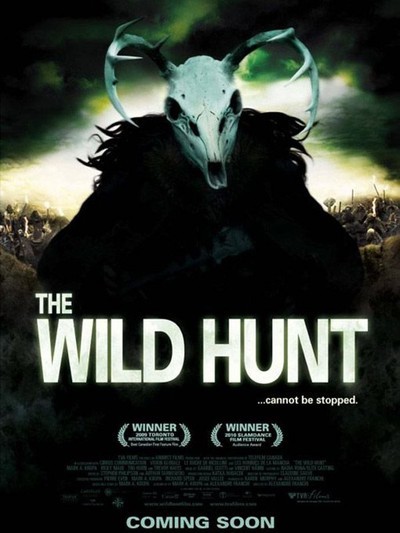
by Todd Brown, January 19, 2010
No doubt about it, Alexandre Franchi's The Wild Hunt was one of the big successes of this year's Toronto International Film Festival. Set in the world of LARPing - large scale fantasy role play games - Franchi's debut feature could easily have simply played to the cult crowd but he aimed higher than that and ended up with a film that begins with a quirky hook but ends with a deadly serious finish that turned an awful lot of heads and set a lot of tongues talking.
With the film about to have its US debut at Slamdance, expect more of the same there. But don't just take my word ... Franchi has just sent a pointer to the freshly completed trailer for the film, now available on the official website and embedded below. Take a look.
+++
Film Review: The Wild Hunt (2009)
SYNOPSIS:
A medieval reenactment game turns into a Shakespearean tragedy when a non-player crashes the event to win back his girlfriend.
REVIEW:
This is a different film from the kind I usually get, and I’m finding it difficult to try and explain it. There are three seperate stories going on at the same time. Each runs parallel to the other and create a complete fourth story. I know, it sounds complicated. But its really not.
Our main characters are two brothers, Erik and Bjorn (Ricky Mabe and Mark A. Krupa). Erik is fairly rooted, caring for their elderly father who seems to have dementia. Dad only speaks Norwegian and Erik doesn’t know what he’s saying.
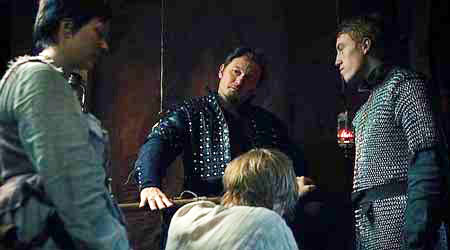
Bjorn, on the other hand, is an avid gamer. I’m not talking about XBox here. Bjorn is a live action role player. If you aren’t familiar with LARPing, it’s Dungeons and Dragons taken to a whole new level. Costumes, armour, padded weapons, and a complicated rule system are used to live the fantasy. Which is exactly what Bjorn does.
It is the time of year for the annual encampment, where LARPers from all over the country come to a replica medieval village and spend however many days actually living as their characters full time. The culmination of the event is the “Great War”, where all the players take sides and have at it.
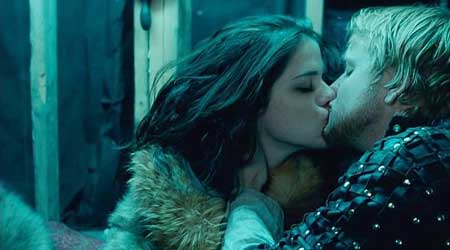
Erik’s girlfriend Lyn (Tiio Horn) is a LARPer, too. Erik just doesn’t get it and as a result Lyn drops him like a hot rock to go to encampment and play out her fantasy with the evil Shaman Murtagh (Trevor Hayes). Yes, it is as sordid as it sounds.
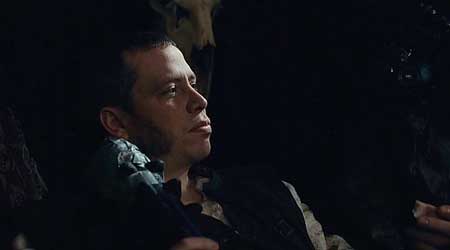
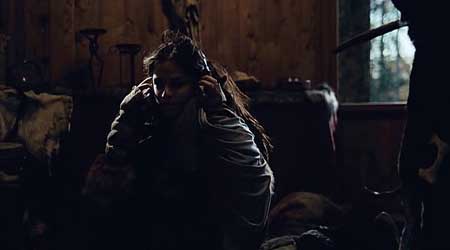
Erik decides to go to the encampment in a last-ditch effort to win Lyn back. He is stopped at the gate by the referee Tamara (Claudia Jurt) and forced into a period costume, otherwise he won’t be allowed to enter the grounds. She takes him through the Shire to meet with Lyn who is a prisoner of the evil Shaman (in game, that is).
As you can imagine, this goes badly. But rather than just say the heck with it and leave, Erik stays and his brother decides to help him “rescue” the “princess” and give him a chance to win her back. This is where everything really goes wrong.
By introducing this real world drama into the encampment, the entire weekend’s game spirals very quickly out of control. As Erik and Bjorn basically re-write the scenario to try and get to Lyn, the path to the Great War is changed and that kinda pisses a lot of people off. It gets personal after a while. As such, the stage is set for a Shakespearan-level tragedy.
So as I said, there are three stories. The first is the relationship between the brothers, Erik and Bjorn. They are obviously estranged and Erik resents Bjorn for escaping into fantasy and leaving him to care for their father. When Erik turns up at the encampment, Bjorn siezes the moment as a bonding opportunity and a chance to involve Erik in his world.
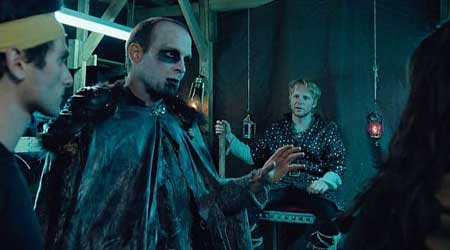
The second story is all about Lyn. She has a child-like naivete concerning her relationships with both Erik and Murtagh. She can’t seem to draw the line between what is the game and what is real. Erik is forced to join the game in an attempt to get on her level.
The third story is about their father. You don’t see much of him in the film, as the majority of the story takes place in the encampment. But it is important to keep him in mind.
These threads all converge to create the overall fourth story – the story of a fragmented family and how they work out (or fail to work out) their differences. All the characters in the story are damaged in some way. Each plays the game in search of some truth and power for themselves.
The film was written and directed by Alexandre Franchi (from a story by Mark A. Krupa). He has very little in the way of experience, as I could only find a few French language shorts on his IMDB listing. But he does a masterful job with this film, especially the battle sequences. There’s a lot of chaos to capture in several sections of the story.
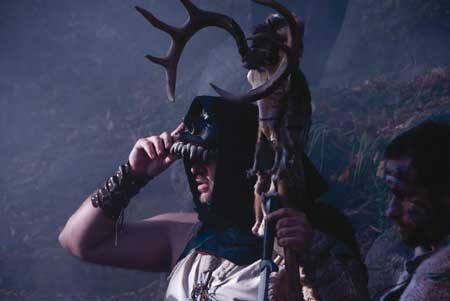
The cast are really wonderful as well. Ricky Mabe has quite a few credits to his name, including Zack and Miri Make A P**no. His character has probably the largest arch in the story, going from one extreme to the other and he plays it well.
Mark A. Krupa as Bjorn is another actor that really stands out. He has a long list of credits as well.
Tiio Horn has worked with Ricky Mabe before in a film called The Trotsky. You might also know her from Hemlock Grove, Defiance, and Supernatural.
And of course, our evil Shaman played by Trevor Hayes. He has quite a long list of credits as well. Like Lyn, Murtagh has trouble seperating the real world from the game. And he plays the villain of our story with just the right balance of cheese and pathos.
I kinda liked it. I mean, when the film opened on a battle between Vikings and Celts, I rolled my eyes and sighed. I love low budget films, but low budget period pieces are terrible. Once I realized what was actually going on, I breathed a sigh of relief. This isn’t a particularly low budget film ( made for around 300,000 CAD) and I’m geussing they put out a casting call for every re-enactor and Rennaissance faire employee in Quebec. “We’re making a movie. Bring your garb!”
Overall, it looks good. I don’t know if they built the village for the film or shot in an established Renn Faire grounds. You never forget that it isn’t “real”, and with very few exceptions (Bjorn being one of them) most of the people break character several times through out the story. For anyone who ever LARPed, there are some moments of comedy that we will all recognize.
This may not be for everyone, obviously. But the story is well written, and works on a lot of different levels. Visually, quite good. The cast (all of them, and there are a lot of them) do a really good job.
So on a scale of one to ten, ten being awesome, I’m giving this film 6 foam swords.
More Background On WildHuntFilm.com
WildHuntFilm.com functioned as the official website for The Wild Hunt, a Canadian independent feature film released in 2009. The site served as the primary digital home for the film during its festival run and early distribution phase, offering audiences, critics, and festival programmers a centralized source for information about the project. Like many independent film websites of the late 2000s, WildHuntFilm.com combined promotional materials, narrative context, and press coverage into a single destination that reflected both the film’s identity and the era’s web design conventions.
Rather than operating as an ongoing publication or entertainment portal, WildHuntFilm.com existed with a focused purpose: to introduce viewers to The Wild Hunt, contextualize its themes, and support its visibility within the international independent film circuit. Today, the website remains significant primarily as an archival artifact, capturing how independent films were marketed online before streaming platforms and social media became dominant.
The Film Behind the Website
Narrative Premise and Themes
The Wild Hunt tells the story of Erik Magnusson, a young man struggling with personal responsibility, grief, and a deteriorating romantic relationship. When his girlfriend becomes deeply immersed in a live-action role-playing (LARP) community, Erik follows her into a medieval fantasy encampment in an attempt to win her back. What begins as an awkward intrusion into a subculture he does not understand gradually escalates into a violent and tragic unraveling of fantasy, ego, and suppressed emotion.
The film explores several overlapping themes:
-
The psychological appeal of escapism
-
The fragile boundary between role-play and real-world consequence
-
Masculinity, power, and group identity
-
The human desire for ritual, myth, and belonging
WildHuntFilm.com reflected these themes through its language and presentation, emphasizing the idea of a “modern medieval saga” and positioning the film as both a character study and a social critique.
Ownership, Production, and Creative Origins
The Wild Hunt was written and directed by Alexandre Franchi, marking his debut feature film. The project was developed as a Canadian independent production with a modest budget, yet it achieved a visual and narrative scale that exceeded expectations for films in its category.
The production benefited from the participation of real LARP communities and large-scale reenactment events, lending authenticity to the film’s environments and costumes. This approach allowed the filmmakers to depict immersive fantasy settings without constructing them entirely from scratch, while also grounding the story in lived subcultural practices.
WildHuntFilm.com served as the public-facing extension of this production effort. It framed the film not merely as entertainment but as an exploration of identity, myth, and contemporary life.
Purpose and Function of the Website
A Central Promotional Hub
At the time of the film’s release, WildHuntFilm.com acted as the authoritative source for information about The Wild Hunt. Visitors could learn about the storyline, the creative team, and the conceptual motivations behind the film. This was particularly important for festival audiences encountering the movie without prior context.
News and Festival Updates
The site prominently featured news related to festival screenings and awards. Announcements regarding audience awards and festival selections helped establish credibility and momentum, especially within independent film circles where word of mouth and critical recognition play a crucial role.
Reviews and Critical Commentary
WildHuntFilm.com included excerpts and summaries of critical responses, offering visitors insight into how the film was being received. These reviews often highlighted the film’s tonal shift from dark humor to tragedy, its striking cinematography, and its willingness to challenge audience expectations.
Audience Engagement
Although not interactive by modern standards, the site encouraged engagement through shared trailers, press coverage, and links to social platforms that were emerging at the time. For many viewers, the website served as a gateway to discovering the film’s broader reception and cultural conversation.
Popularity and Reach
Festival Success
The film achieved notable recognition within the festival circuit. It won audience awards at major independent festivals and received honors for debut filmmaking, positioning it as a standout Canadian feature of its year. These accolades significantly increased the visibility of both the film and its official website during the peak of its promotional life.
Critical Attention
Critics frequently commented on the film’s deceptive structure. What initially appeared to be a quirky or satirical look at fantasy role-playing evolved into a darker examination of group psychology and latent aggression. This tonal complexity made the film memorable and frequently discussed in reviews, essays, and post-screening conversations.
WildHuntFilm.com amplified this attention by curating critical voices that framed the film as intellectually ambitious rather than purely genre-driven.
Audience and Intended Viewers
The website was designed for several overlapping audiences:
-
Independent film enthusiasts seeking unconventional narratives
-
Festival programmers and critics researching featured selections
-
Viewers curious about LARP culture and its representation in media
-
Fans of Canadian cinema and debut filmmakers
By addressing both casual visitors and informed cinephiles, WildHuntFilm.com balanced accessibility with depth, making it useful to a wide range of readers.
Cultural and Social Significance
Representation of Subcultures
One of the most enduring aspects of The Wild Hunt is its depiction of live-action role-playing communities. While some members of these communities criticized the film for exaggeration or misrepresentation, the film undeniably brought greater public awareness to a niche cultural practice.
WildHuntFilm.com played a role in framing this depiction, emphasizing the film’s interest in psychology and myth rather than in mocking its subjects. In doing so, the site contributed to a broader conversation about how subcultures are portrayed in mainstream and independent media.
Exploration of Identity and Ritual
The film’s focus on ritualized behavior, symbolic roles, and communal rules resonated with viewers interested in anthropology, sociology, and psychology. The website echoed these ideas by presenting the story as a commentary on modern life’s hunger for meaning and structure.
Independent Cinema Legacy
As an early example of a well-executed independent film website, WildHuntFilm.com represents a transitional moment in digital film marketing. It predates the dominance of streaming platforms and social-media-only promotion, preserving a model in which a standalone website acted as the narrative and promotional anchor for a film.
Design and Presentation
The site’s design reflected late-2000s web aesthetics:
-
Static informational pages
-
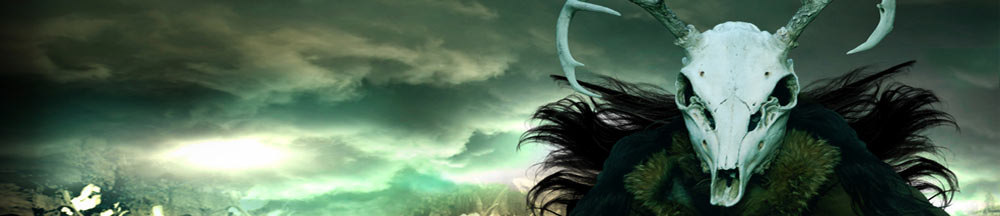
Dark, atmospheric visual themes aligned with the film’s tone
-
Emphasis on text, trailers, and press excerpts rather than interactive features
While simple by contemporary standards, this approach was effective in delivering a cohesive identity and reinforcing the film’s mood.
Current Status and Archival Importance
Today, WildHuntFilm.com is best understood as a historical and archival resource rather than an active promotional site. Its remaining presence — preserved through web archives and references — provides insight into how independent films once navigated visibility, credibility, and audience engagement online.
For researchers, film historians, and digital archivists, the site offers a snapshot of early 21st-century indie film culture and its relationship with the web.
WildHuntFilm.com was more than a marketing page; it was an extension of The Wild Hunt’s artistic intent. By combining narrative explanation, critical reception, and festival recognition, the site helped situate the film within broader cultural and cinematic conversations. Though no longer active, it remains a valuable artifact of independent film history, reflecting both the ambitions of its creators and the digital strategies of its time.